Synthesis Science Course Development
Nick J Lyon
Outline
- Long Term Ecological Research Network Background
- Synthesis Course Motivation
- Strategic Value & Audience
- Development Approach
- Lessons Learned
LTER Network

- NSF-funded
- Established in 1980
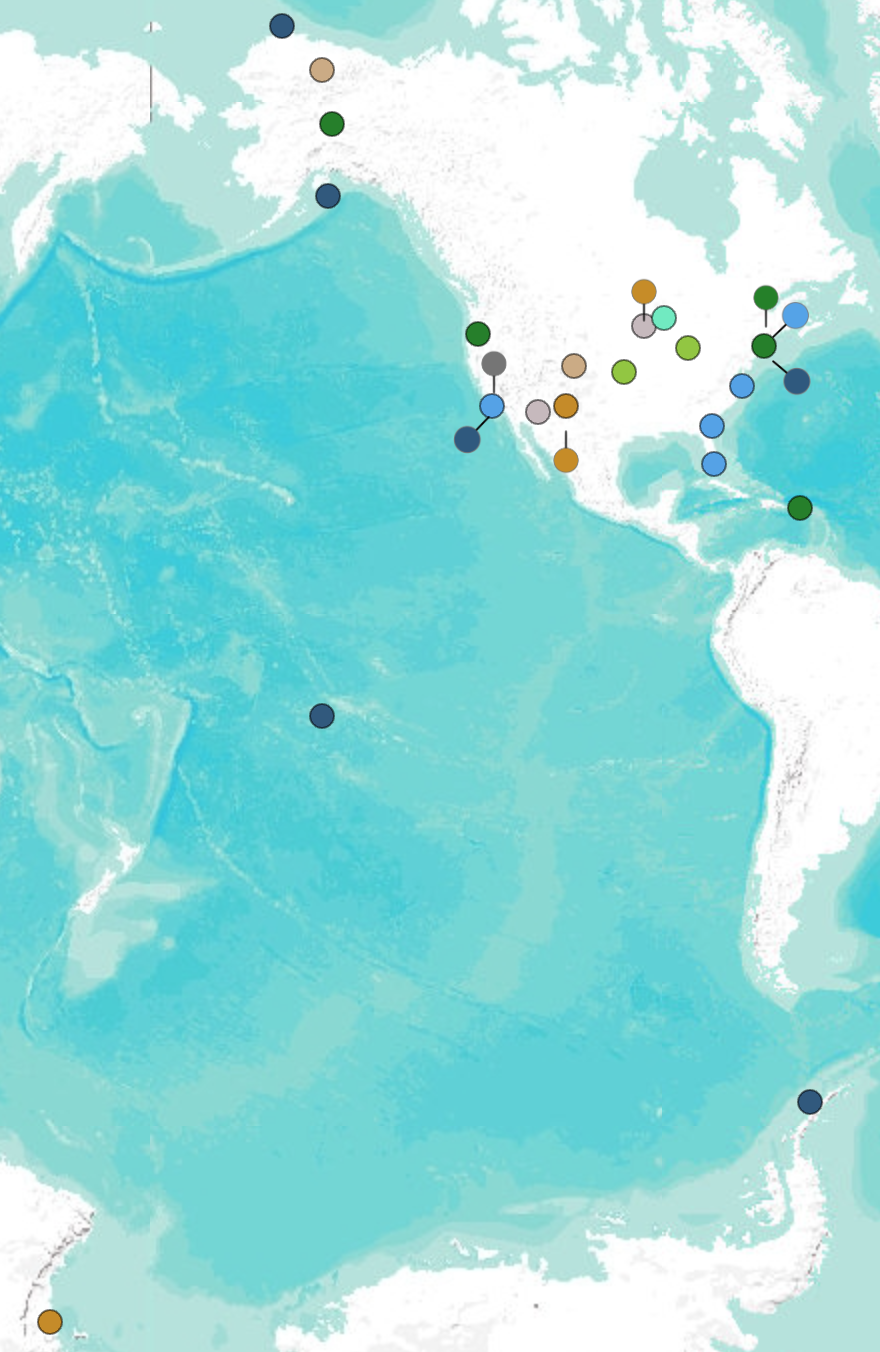
- 26 sites currently in the network
- & LTER Network Office
- Thousands of investigators
- Hugely productive!
- >7,000 public datasets
- >17,000 journal articles
LTER Core Research Areas
- – Primary Production
- – Populations & Communities
- – Disturbance
- – Organic Matter
- – Inorganic Nutrients
- – Land Use/Cover Change
- – Human-Environment Interactions
LTER & Synthesis
- LNO funds synthesis working groups
- ~2-4 / year
- For LTER, “synthesis” means:
Integrating existing data from many sources in order to test novel hypotheses
- Some (not all) working group data must be from LTER sites
- Groups are immensely enthusiastic, curious, and productive
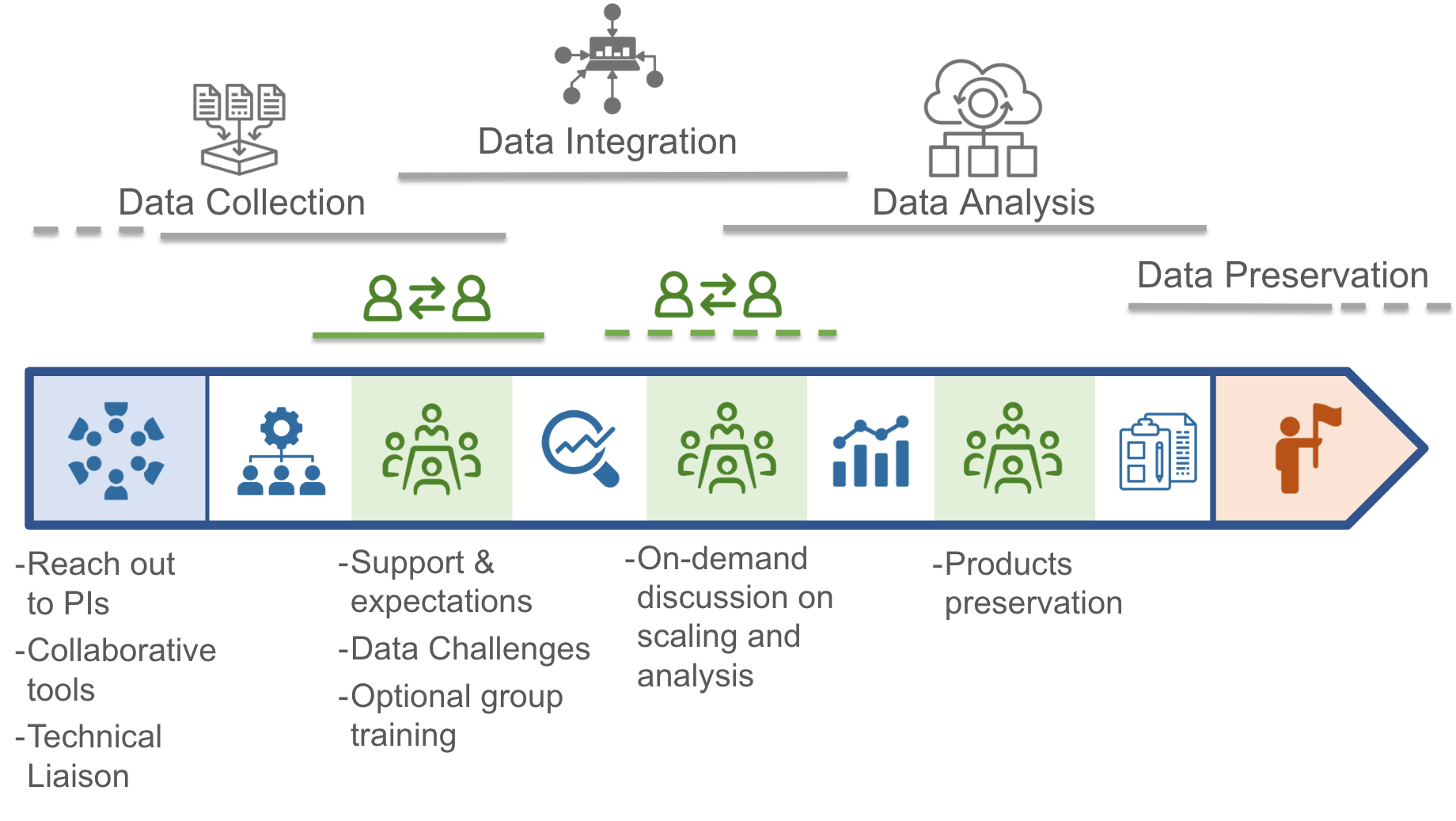
Working Group Process
Working Group Support
My primary role as the LNO data scientist is to support working groups
- – Offer advice on reproducibility, organization, coding, etc.
- – Create & offer workshops & trainings
- – Write/review code for data harmonization, QC, analysis, visualization, dashboards, etc.
- – Advise on appropriate statistical tests and interpret results
- – Draft relevant pieces of peer-reviewed manuscripts
Lyon & Working Groups
- From 2022-26, I supported 180+ researchers across 17 working groups
- Often warranted inclusion as a co-author
- Over time, developed insight into human dimension
- Actions happy/successful groups take to remain so
- Team dynamics obstacles and how to solve them
- Now offer interpersonal support in addition to data science services
- E.g., discussing intellectual credit policies, navigating within-team conflict, facilitation of tech-adjacent discussions
Working Groups & ECRs
- Nearly all groups include early career researchers
- Typically graduate students and post-docs
- Sometimes undergraduates!
- ECRs get a ton out of participating
- E.g., networking, leadership opportunities, publications, job opportunities
- Groups get a lot out of including ECRs as well!
- E.g., novel analytical methods, new perspectives, coding/technical literacy
Synthesis Training & ECRs
- ECR demand for synthesis training far outstrips working group capacity
- Inspired creation of a course: Synthesis Skills for Early Career Researchers
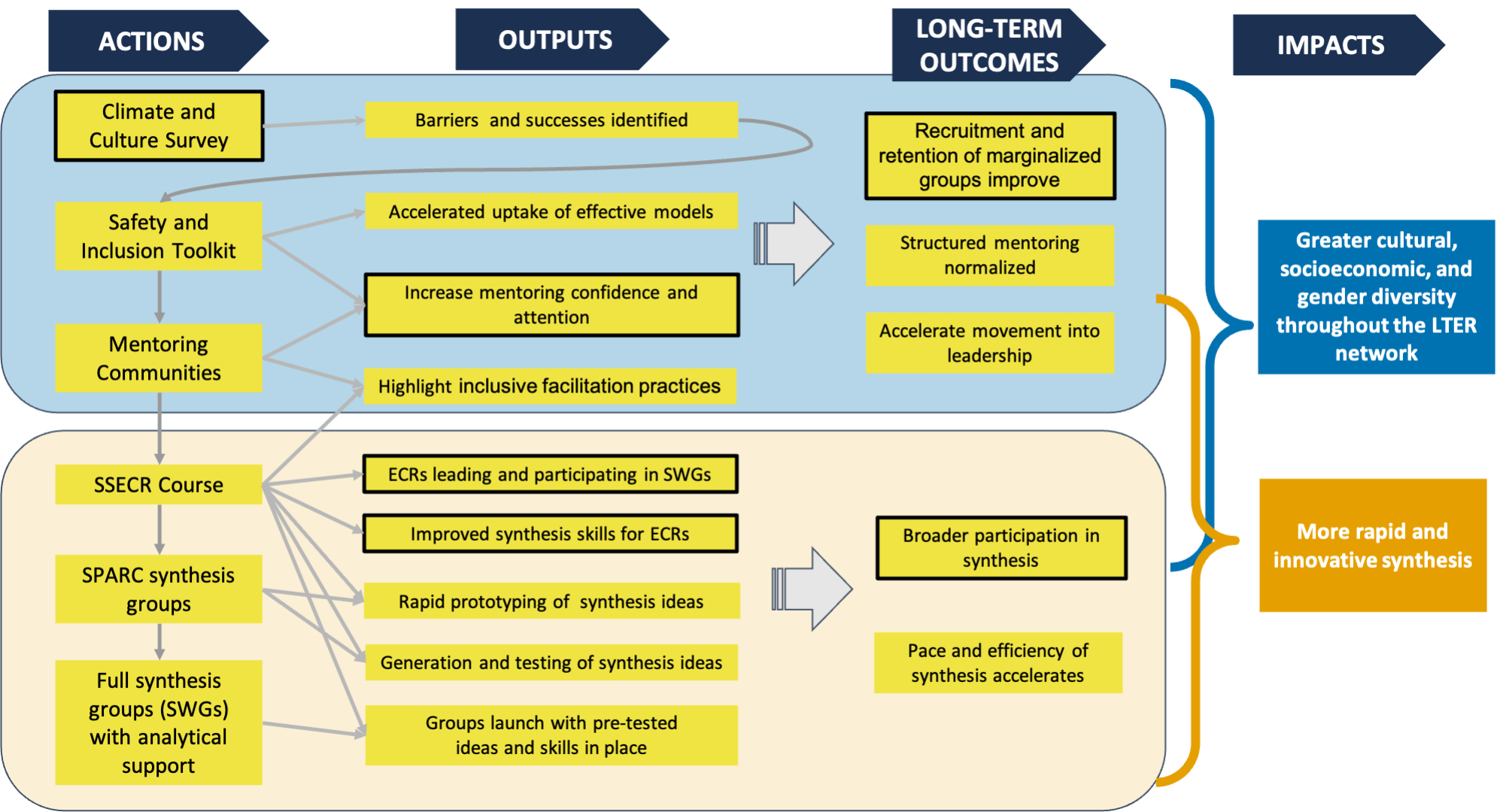
- SSECR aims to train ECRs in needed technical and interpersonal skills
- Synthesis science is inherently collaborative
- ECRs frequently indicated they weren’t formally trained in either sphere
- Timed to leave students well-prepared to apply for LTER working group funding
- Scoped to be useful beyond LTER format of working groups
SSECR & LTER Strategic Plan
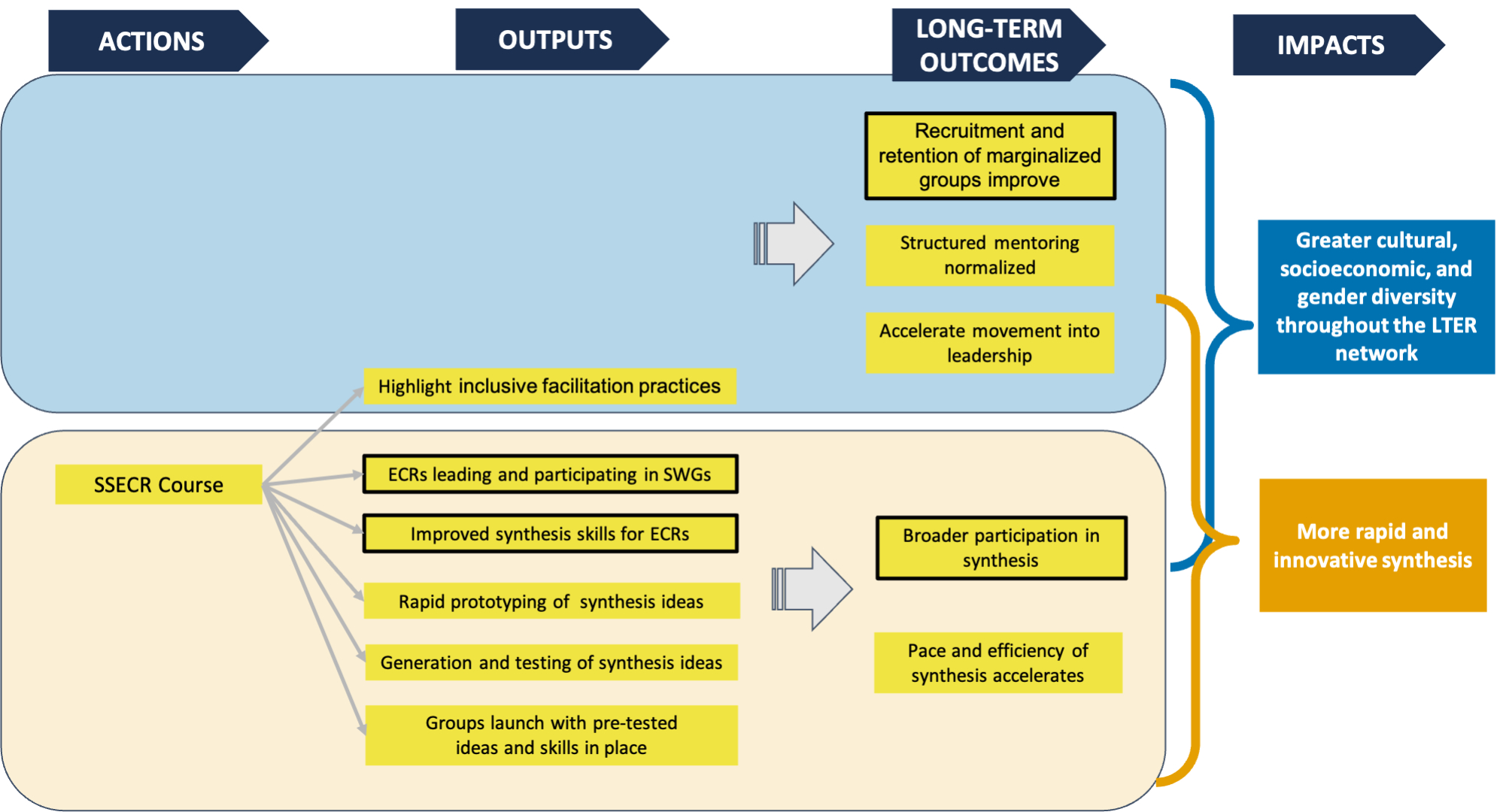
Audience
Cohort #1 (2024-25)
- 25 students (Master’s / PhD / post-doc)
- Were actively working at an LTER site
- Or (recent) past work at one
- Commit to 3 hours biweekly for 9 months
Cohort #2 (2026)
- 29 students (Master’s / PhD / post-doc)
- Active/past work at a long-term site
- Not necessarily “LTER”
- Commit to 2 hours weekly for 4 months
- Wanted students with some prior research experience
- No requirement for synthesis experience
SSECR Modality
- SSECR is/was offered synchronously (mostly online)
- But, having materials be free and publicly-available was a priority
- Built to maximize utility for asynchronous & synchronous learners
- Regardless of LTER Network connection
- This ethos shaped several structural elements of the course
- Module content and organization
- Preference for website pages over slide decks
- Activity & discussion prompt structure
Development Team
- 3 course leads: Marty Downs, Carrie Kappel, Nick Lyon
- 5 additional design team members
- 3 additional contributors (narrower focus on content editing/feedback)
- 19 panelists / guest speakers
Course Development Plan
- Define project management framework for tackling a project of this scope
- Scope & draft 14, quasi-independent “modules”
- Cover fundamental elements of team-based synthesis science
- Plan & support student-lead synthesis projects
- Facilitate students in coalescing into teams around actionable, exciting projects
2024-25 Module List
Team Science
- Team Sciences Practices
- Inclusive Facilitation
- Project Management
- Supporting Divergent, Emergent, and Convergent Thinking
- Authorship & Intellectual Credit
- Next Steps & Logic Models
- Communicating Findings
Data Science
- Version Control
- Reproducibility Best Practices
- Data Discovery & Management
- Data Visualization & Exploration
- Data Wrangling
- Analysis & Modeling
- Notebooks & Website Creation
- Bonus: Spatial Data
- Bonus: Interactive Apps with Shiny
2026 Module List
- Move away from data vs. team science dichotomy
- Massive refactoring effort
- Forked before editing to preserve live 2024 version
- Still 14 modules but each features a blend of skills
- Team & data science instructors paired for each
- While refactoring, also changed structure to increase course link stability
So, How Did We Do It?
Development Tool Overview
- Git - version control
- Quarto - website development
- GitHub - website hosting, continuous integration for website rendering (GitHub Actions), project management, team coordination
- R - embedded code demos
- Google Drive - internal documentation, course in/outputs
Version Control
- Onboarded design team to Git/GitHub use & best practice
- Encouraged to adopt Conventional Commits-style messages
- Mostly working in
mainbranch- Accessible to largest subset of design team
- Branch + Pull Request for major updates
CONTRIBUTING.mdfor collaboration plan
NEWS.md+ GitHub Releases for DOI (from Zenodo)
Project Management
- Extensive adoption of GitHub issues and milestones
- Further organization enabled by a GitHub project
- Team used issues & issue metadata to:
- Delegate or trade tasks
- Discuss & document judgment calls
- Standardize pedagogical approach among modules
- Standardize format elements among modules
Website Creation/Maintenance
- Quarto is a computational notebook system
- From makers of Positron; successor to RMarkdown
- Akin to Jupyter Notebooks
- Supports highly flexible website design
- Low learning curve
- Combined with GitHub Action for re-deployment of site
- Allows direct editing of pages in GitHub
- Easily supports embedded code chunks for applied tutorials
- Cool code annotation features within code chunks
Student Group Support
- First cohort yielded four projects
- Carbon Cycling Responses Across Spatiotemporal Scales
- Synchrony of Above & Belowground Responses Across Ecosystems
- Diversity-Stability Relationships
- Effects of Environmental Drivers Across Ecological Scales
- Offered working group-level support
- Create GitHub repository (with custom
.gitignore) - Advise on organization, reproducibility, statistical approach, etc.
- More code review, less direct code writing
- Offer tutorials extending beyond course content
- Create GitHub repository (with custom
Student Group Outcomes
- Increased student skill and confidence with team synthesis
- Adoption of version control / reproducibility best practices into non-synthesis work
- Strong within-cohort sense of community
- Several peer-reviewed papers in progress
- One currently-funded LTER working group (so far!)
Lessons Learned
Technical
- Project management schema slightly over-engineered
- Needed increased ‘modularity’ within course modules
- Needed more discussion of AI (esp. generative AI)
- Guiding principles rather than specific (often quickly-superseded) tools
Interpersonal
- Mutual student-teacher trust was pre-requisite to course success
- Should have paid more attention to design team capacity & availability
- Could increase emphasis on reproducible, low-friction contribution methods
- Participant feedback invaluable to process
Thanks! Questions?
Handing Over the Reins
In order to transition project leadership, a colleague would need to:
- Explore the process documents in the Git repo & Google Drive
- E.g.,
CONTRIBUTING.md, contents of “notes/” folder
- E.g.,
- Look at the GitHub issues on the course repository
- Ask questions of the rest of the design team
- Project management schema developed collaboratively
- So all design team members are able to onboard new collaborators